
Seasonal Mockup Calendar: When TPT Sellers Should Refresh Their Covers

Most TPT sellers update their seasonal covers too late.
By the time many sellers switch their fall covers in October, the teachers shopping for Halloween and fall resources have already bought what they needed weeks earlier.
That’s the mistake.
Your covers should not match the current season. They should match the season teachers are actively shopping for.
And on TPT, buyers often shop early.
The 6-Week Rule
Teachers plan ahead by nature. They aren’t shopping for Halloween resources on Halloween week. They’re shopping while planning lessons, organizing centers, and prepping future units.
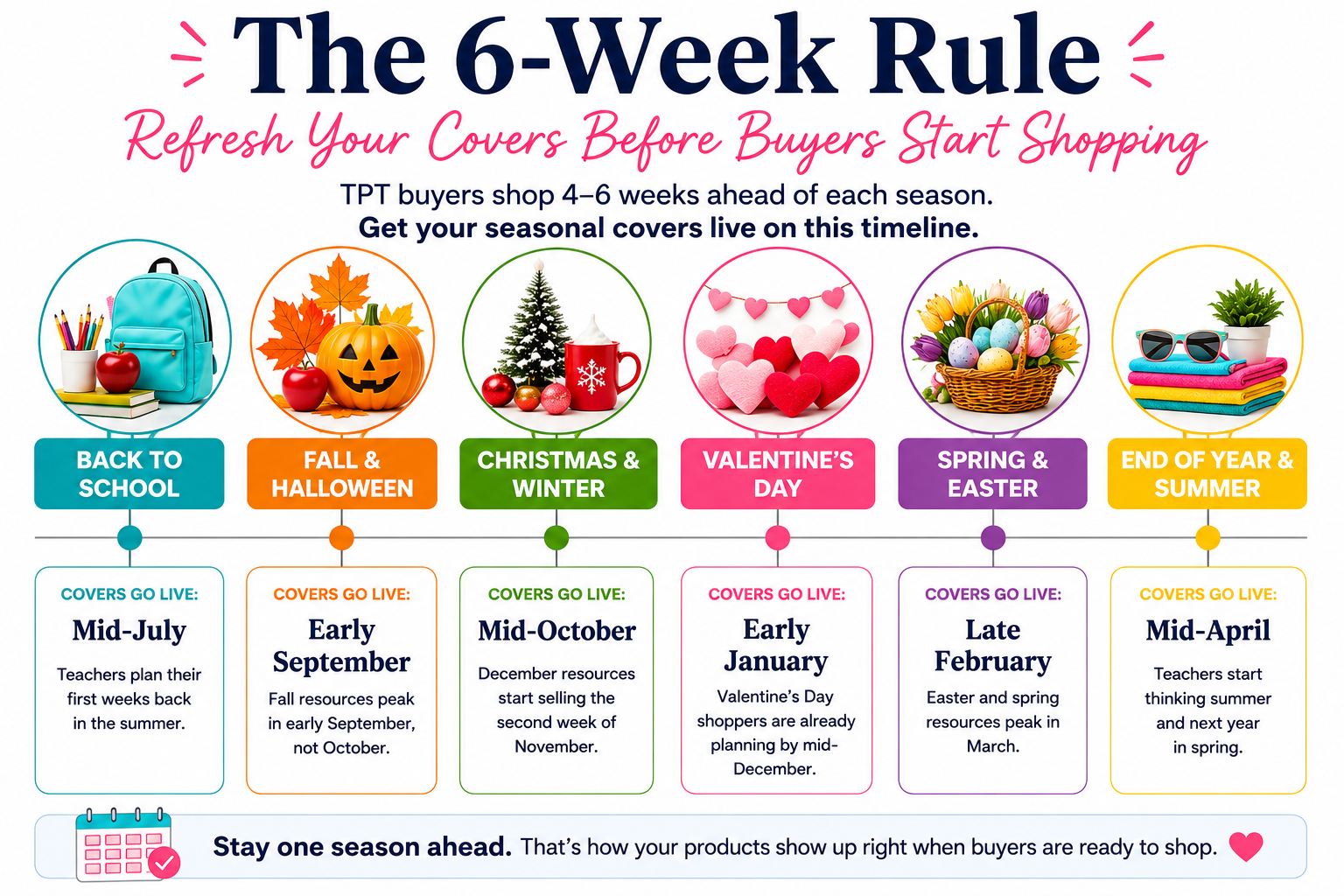
That means your seasonal covers need to go live about four to six weeks before the actual holiday or season.
Here’s the rough timeline:
Back-to-school: mid-July
Fall & Halloween: early September
Christmas & winter: mid-October
Valentine’s Day: early January
Spring & Easter: late February
End of year: mid-April
If your store still looks summery in late July, buyers already subconsciously see your products as “behind,” even if the resource itself is excellent.
On TPT, visual timing matters.
What Most Sellers Get Wrong
Most sellers update their covers reactively.
Halloween is coming, so they refresh Halloween listings in October.
Christmas is around the corner, so they switch winter covers in December.
But buyers have already moved on by then.
The sellers who consistently perform well are usually working one season ahead at all times. Their stores already look relevant before buyers begin searching.
That matters more than many sellers realize.

A Real Example of Bad Timing
Last fall, I watched a seller release a beautiful Halloween resource on October 25th.
The product looked great. Strong cover design. Good pricing. Solid thumbnails.
It barely moved.
Not because the product was bad, but because the buying window had already closed. By late October, most teachers had already purchased the Halloween resources they planned to use. Their attention had shifted to Thanksgiving, November literacy activities, and early Christmas prep.
The product will probably sell next September.
Timing on TPT is rarely a small detail. Sometimes it matters more than the product itself.
The Seasonal Calendar I’d Follow
If I were refreshing an entire store this year, this is the order I’d work in:
June–July
Refresh back-to-school products first.
This is one of the biggest revenue windows of the year on TPT. If you only prioritize one major cover refresh annually, make it this one.
Bright, clean, August-ready visuals matter here.
August–September
Update fall and Halloween products.
Apple themes, warm tones, pumpkins, classroom fall imagery — this is when buyers begin actively searching.
Not October.
October
Switch to Christmas and winter covers.
Teachers start planning December activities surprisingly early, especially before Thanksgiving break.
November–December
Refresh January, Valentine’s Day, and early spring resources.
By winter break, many teachers are already planning for February.
January–February
Move into spring, Easter, and test-prep season.
This is also a great time to refresh end-of-year products before competition increases in spring.
March–April
Refresh end-of-year, summer, and even next year’s back-to-school products.
The cycle starts earlier than most sellers expect.
How to Stay Ahead Without Constantly Redesigning
The easiest way to stay ahead is to plan seasonal refreshes in batches instead of reacting month by month.
Many successful sellers update covers quarterly or map out their seasonal visuals for the entire year during summer break.
That way:
covers are ready before the buying season starts
your store stays visually current
and you avoid scrambling every holiday week
This is also where coordinated mockups become incredibly valuable. Instead of reinventing your product visuals every season, you already have cohesive seasonal imagery ready to rotate in at the right time.
The goal is not just “cute covers.”
The goal is making your store feel current when buyers are actively shopping.
The Sellers Who Win Understand Timing
The biggest difference I notice between struggling sellers and consistently successful ones is not always product quality.
It’s timing.
The sellers who outperform year after year understand that TPT is seasonal long before the calendar says it is.
They are already preparing Valentine’s Day while everyone else is still focused on Christmas.
They are already updating back-to-school covers while other sellers are mentally in summer mode.
They meet buyers where their attention already is.
That shift alone can completely change how a store performs.
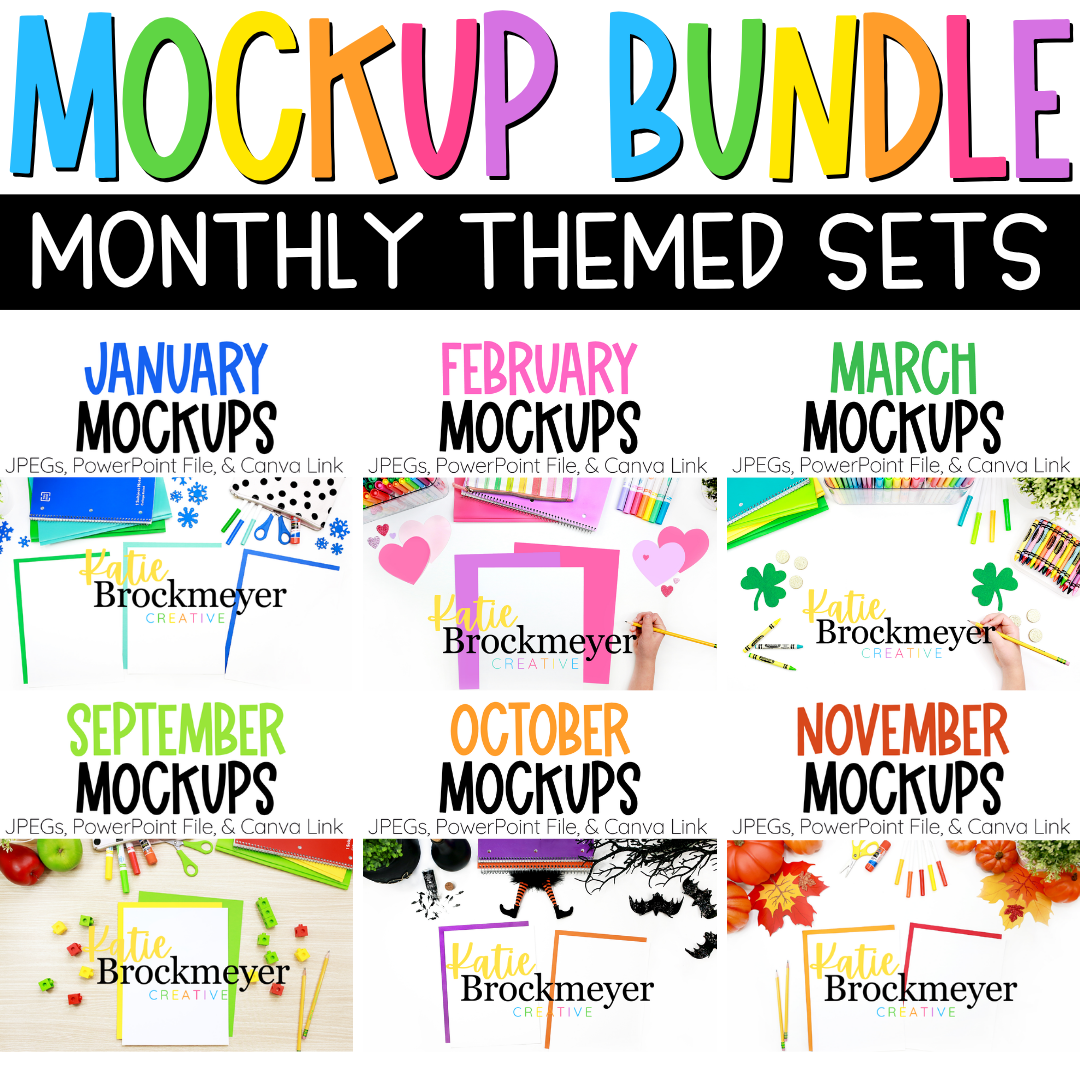
If you want a full year of coordinated seasonal mockups ready to rotate into your listings ahead of every season, check out my Seasonal & Holiday Mockups Bundle on TPT.
💛 Katie
